
Frequency Specific Microcurrent Therapy
Most Frequency Specific Microcurrent (FSM) is delivered in chiropractic and integrative medicine clinics. At Synergy Healthcare, FSM is offered inside a working PT/OT clinic — used as an adjunct to functional rehabilitation, not as a standalone wellness service. That difference matters. The technique is most effective when paired with the kind of structured treatment plan PTs and OTs build for patients every day.
What Frequency Specific Microcurrent Actually Is
Five practitioners at Synergy are trained in Frequency Specific Microcurrent Therapy, which is uncommon. Most clinics offering it have one. The depth lets us fit FSM into your broader treatment schedule rather than asking you to coordinate around a single specialist.
Frequency Specific Microcurrent uses a microcurrent — one millionth of an ampere — delivered through adhesive electrodes placed on the body with a magnetic field device. The current is so small that it falls below the threshold of sensation. You can watch the device’s conductance meter respond, but you generally can’t feel the current itself.
The “frequency specific” part is what separates Frequency Specific Microcurrent from a standard TENS unit. Different tissues and conditions have different protocol settings. A provider treating shoulder bursitis selects different frequencies than one treating peripheral neuropathy or post-surgical inflammation. The premise — built up across decades of clinical use — is that specific frequency pairings resonate with specific tissue types and support the body’s own healing response.
How FSM Treatment Works, in Plain Terms
The most-cited mechanism is increased ATP production. ATP is the energy currency every cell uses to repair itself. When tissue is injured or chronically inflamed, ATP availability becomes a bottleneck on healing speed. Studies on microcurrent application have shown increased ATP production in treated tissues, which is the practical reason acute injuries often respond meaningfully in the first few sessions.
A second effect is autonomic nervous system regulation. Many patients describe a deeply relaxed, almost sleepy state during a session — useful in its own right, especially when chronic stress and pain are reinforcing each other.
Honest framing: chronic conditions don’t respond as predictably as acute ones. Some respond well; some don’t. The frequencies either resonate with the tissue and produce a measurable response, or they don’t. There’s no in-between, and there are no significant side effects when they don’t work. After the first two or three sessions, your provider will tell you straight whether FSM is doing what it should for your specific case.
Patient Support
(509) 413-1630
info@synergyspokane.com
Commonly Used Therapies:
What a Session Looks Like
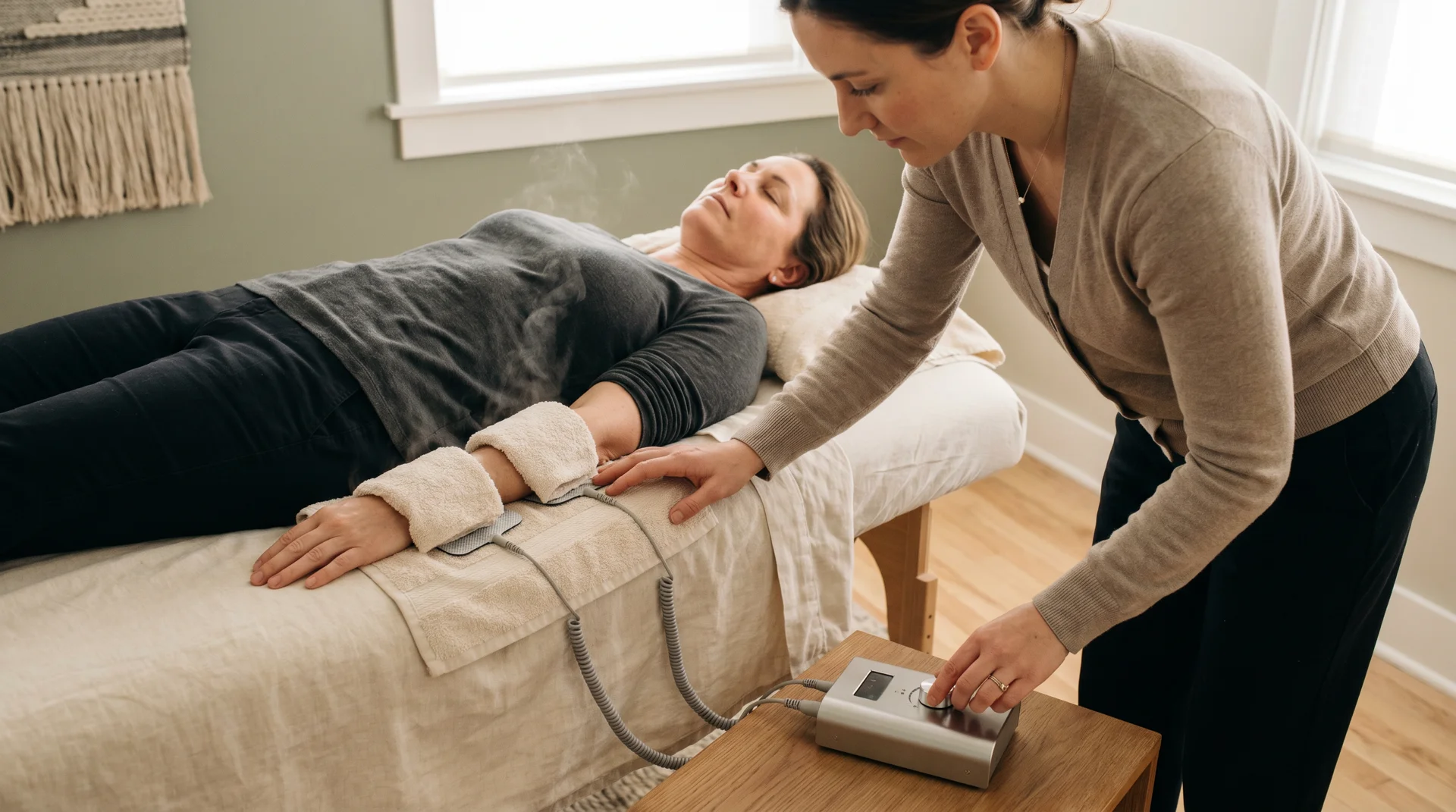
You stay awake but lie down comfortably. The provider places adhesive electrodes — usually two pairs — in positions that allow current to travel through the target tissue. The session runs 30 to 90 minutes depending on what’s being treated. You generally won’t feel the current; what you’ll likely feel is increasing relaxation, often drowsiness, sometimes sleep.
Hydration matters. Drink at least a quart of water in the hour before treatment. Frequency Specific Microcurrent doesn’t work well in dehydrated tissue, and chronically dehydrated patients may need to rebuild hydration over several days before they respond.
A note on after-effects: some patients experience a mild detoxification response about 90 minutes after treatment. Continued hydration usually handles it; an antioxidant supplement can help if it’s pronounced. When muscles release effectively during a session, range of motion can also increase enough that nearby joints or nerves feel temporarily sore as the body adjusts. That clears within a day or two.
What FSM is Most Often Used for at Synergy
FSM is an adjunct therapy, not a primary one. It works best paired with active rehabilitation. The conditions where Synergy patients most often add FSM to their plan:
Sprains, strains, sports injuries, and post-surgical inflammation typically respond best when treatment begins within hours to days of the injury. FSM can shorten recovery time and reduce pain when started early.
Fibromyalgia (especially when associated with cervical spine injury), myofascial pain, and chronic regional pain syndrome (CRPS, formerly RSD) often respond when conventional approaches have plateaued.
Sciatica, postherpetic neuralgia, peripheral neuropathy, carpal tunnel syndrome — frequencies specific to nerve tissue can address pain at the source rather than masking it.
Persistent post-concussive headache, fog, and sleep disruption are common indications, usually as part of a broader recovery program.
Specific frequencies are used to soften and reduce scar tissue
Achilles tendinitis, frozen shoulder, tennis elbow, plantar fasciitis, joint sprains and strains.
Related Reading
Frequency Specific Microcurrent uses square-wave pulses that raise protein synthesis and energy production, with pain dropping within minutes of treatment.
Myofascial trigger points drive head, neck and face pain, sinus congestion, dizziness and tinnitus.
Every patient deserves a Spokane Valley physical therapy service that meets their needs.