Half of all vestibular migraine attacks come with no headache at all. That’s the reason so many people spend years chasing the wrong diagnosis. The vertigo arrives — sometimes with nausea, vomiting, or a sudden intolerance to light and sound — and because nothing hurts, migraine never makes the list of suspects.
If recurring episodes of dizziness or vertigo shut you down for hours or days at a time, vestibular migraine belongs on that list. It’s treatable. Synergy’s vestibular physical therapists evaluate these symptoms every week, and the first visit usually explains more than the previous year of guessing.
What Is Vestibular Migraine?
Vestibular migraine is a neurological condition that causes recurring episodes of vertigo lasting anywhere from five minutes to 72 hours. Attacks can include nausea, vomiting, photophobia (light sensitivity), phonophobia (sound sensitivity), visual disturbances, and — about half the time — a one-sided, pulsating headache.
It affects roughly 2.7% of U.S. adults, and it’s the most common cause of recurrent spontaneous vertigo. BPPV (benign paroxysmal positional vertigo) causes more vertigo overall, but BPPV is positional — triggered by rolling over or tilting the head. Vestibular migraine strikes on its own. That distinction matters, because the two conditions are treated differently, and they can coexist.
The vertigo itself often isn’t the spinning most people picture. Patients describe rocking, floating, swaying — some feel like they’re moving inside their own body. The first episode is frightening enough that many people end up in the emergency room.
Who Gets It, and What Triggers It
Women are affected about five times as often as men, most commonly between ages 30 and 50. Most people who develop vestibular migraine have a personal or family history of migraine, and many were the kids who got carsick on every road trip — childhood motion sickness is a consistent thread.
Attacks are usually spontaneous, but specific factors raise the odds. Stress and poor sleep lead the list. Hormonal shifts, dehydration, illness, and weather changes follow close behind. Food triggers vary by person but commonly include caffeine, alcohol (red wine especially), aged cheeses, processed meats, chocolate, MSG, and artificial sweeteners. Identifying your triggers — not the generic list — is one of the most useful things treatment produces.
How Vestibular Migraine Is Diagnosed
There’s no scan or blood test for vestibular migraine. Diagnosis follows the consensus criteria from the International Headache Society and the Bárány Society:
- At least five episodes of moderate-to-severe vestibular symptoms lasting 5 minutes to 72 hours
- A current or past history of migraine, with or without aura
- Migraine features (one-sided pulsating headache, light and sound sensitivity, or visual aura) during at least half of the vestibular episodes
- Symptoms not better explained by another vestibular or headache diagnosis.
Because the criteria depend on symptom patterns over time, an evaluation with a clinician who works in vestibular disorders daily shortens the road considerably.
What Physical Therapy Actually Does for Vestibular Migraine
There’s no cure for vestibular migraine yet. What exists is management that works — reducing how often attacks come, how hard they hit, and how long they last. Vestibular physical therapy targets each of those.
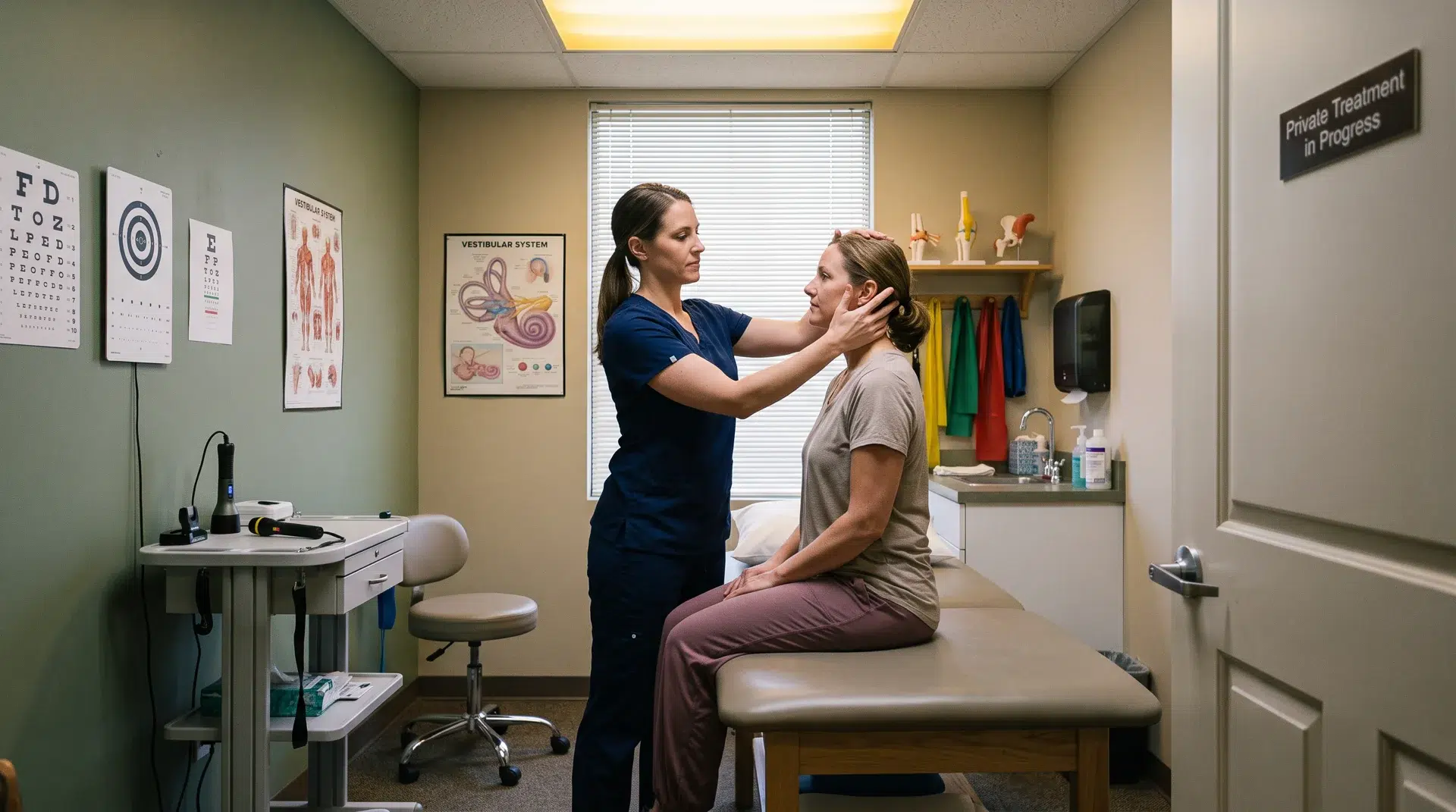
Sorting out what’s actually causing the dizziness. Your first visit starts with a detailed history — symptom patterns, prior treatment, sleep, stress, diet — followed by a physical evaluation of your balance and vestibular system. This testing may briefly provoke symptoms; your therapist keeps it controlled, because it’s how the source gets identified. It also catches co-existing problems like BPPV, which physical therapy treats very effectively and which would otherwise keep sabotaging your progress.
Desensitizing the system. Many people with vestibular migraine develop visual motion sensitivity — dizziness triggered by scrolling a phone, scanning grocery shelves, or walking through a crowd. Habituation exercises gradually retrain the nervous system to tolerate these triggers instead of reacting to them. The same graded-exposure approach applies to head and body movements that currently provoke symptoms.
Finding your triggers. Tracking symptoms against sleep, stress, hormones, and diet turns a random-feeling condition into a pattern you can act on. Regular whole-body exercise — walking, cycling, swimming, yoga, Tai Chi — reduces attack frequency for many patients and can lower reliance on migraine medication.
Get Evaluated in Spokane Valley
If recurring vertigo, dizziness, or motion sensitivity is running your calendar, an evaluation with one of Synergy’s vestibular physical therapists is the direct route to answers.
Contact Synergy Healthcare to schedule a visit.